Baggs
The OutlawsBaggs is a small border town whose reputation for asking few questions makes it a refuge and possible meeting place for outlaws. Del Delaney rides there while fleeing Montana, hoping both to stay beyond the attention of lawmen and to find companions for a bank robbery. The town’s welcome is not presented as simple freedom: its merchants profit from outlaw money, and Del’s arrival draws him into a life from which his companions believe there is no easy return.
Location and Reputation
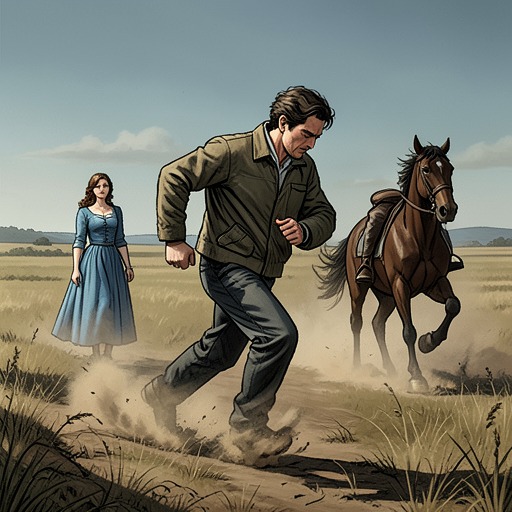
After crossing into Wyoming, Del avoids larger towns, especially county seats, and sustains himself by hunting or buying supplies at country stores. He believes a Wyoming sheriff is less likely to pursue him than a Montana lawman, but the freedom of the open road does not resolve his uncertainty about what to do next. He has considered robbing small stores, then dismissed the idea because their safes would hold too little and their owners had families to support. His uncertainty is also personal: he wonders whether he is mean enough to become an outlaw, while recognizing that committing a first robbery could make retreat impossible.
Baggs offers a practical answer to that impasse. Del has heard of the town before leaving Prairie City; two riders from Wineglass had described it as a place where nobody asked questions. In their account, local businessmen were too interested in outlaw money to investigate a newcomer’s past. Del’s understanding of the town therefore rests initially on travelers’ reports, not on an official promise of protection. What attracts him is the prospect of anonymity and the chance to meet an outfit that needs another man: he reasons that a bank robbery would require more than one person.
The town also carries a reputation beyond those riders’ personal knowledge. It lies on the Colorado–Wyoming line, not far from Brown’s Hole, and had been a hangout for the Wild Bunch. Cassidy and his companions reportedly rode into Baggs when they wanted to spend their money; when they left a day or so later, their purses were lighter and local businessmen were richer. That account makes Baggs a place where outlaw activity and ordinary commerce meet. The town’s willingness to benefit from fugitives helps explain its reputation, without proving that every resident supports or protects them.
Del’s Arrival
Del rides into Baggs at about four o’clock on a bright afternoon in late May. The town is smaller than he had expected, but its limited scale does not deter him: he turns into the first livery stable he sees, then takes a room at the only hotel. Having eaten nothing since morning, he goes to the dining room for supper. These practical first steps—stabling his horse, finding lodging, and getting a meal—place him briefly within the ordinary routines of the town he has approached as a fugitive’s refuge.
At supper, two men sit near windows overlooking Main Street. One is the Kid, whom Del judges to be about eighteen or twenty, small-boned and no more than five feet six, with a thin mustache. The other is a very skinny man, tall enough to stand out at six feet two or more. The Kid invites Del to share their table, turning an arrival made in search of an unknown gang into a direct encounter with potential companions. The tall man is John Smith. Baggs thus serves not merely as a place Del passes through, but as the setting where the three men’s association begins.
The Borderland and Its Outlaws
The group’s subsequent movements show that Baggs is a point of contact rather than a secure base. After riding only about three miles, the men turn off the road toward the Little Snake River, pass through cottonwoods to its north bank, dismount, and stake out their horses. The Kid advises against making a fire because it could reveal their position if Bull Hammer came looking for them. The brief ride from town ends in concealment: proximity to Baggs does not remove the danger posed by pursuit.
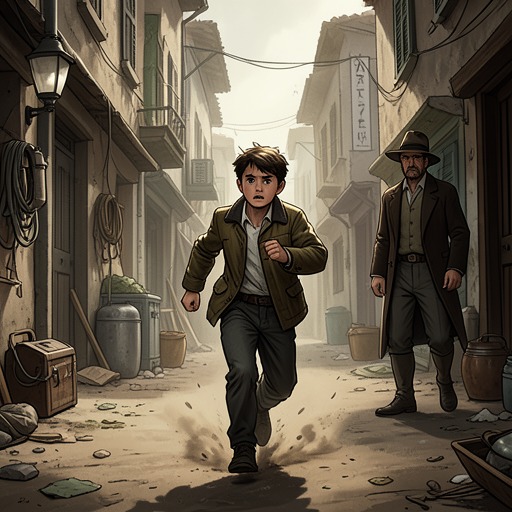
Baggs also remains present in the men’s movements after they leave it. When Del, the Kid, and John Smith tell Stub Rawls after breakfast that they are quitting, Rawls pays them and shakes their hands. As they head toward the corral, two riders arrive from Baggs: Bull Hammer and his deputy, Rip Hughes. The encounter makes the town a route by which law and pursuit can reach the men, even though Del had chosen it for its reputation as a place that did not inquire into a man’s past.
Narrative Significance
Baggs’s importance comes from the contrast between its commercial welcome and the personal risks that gather around the men who use it. Its association with the Wild Bunch and the reported profits local businessmen made from visiting outlaws give Del a plausible reason to hope for anonymity and partnership. The town’s small size, single hotel, and first-seen livery stable ground that expectation in a specific frontier settlement rather than an abstract criminal refuge.
Yet Baggs does not erase the differences among the fugitives or offer them a lasting escape. The Kid later says that he has killed three men and participated in six bank robberies; John Smith explains that he faces a first-degree murder charge at home and has helped hold up a bank. Those later disclosures clarify the danger and accumulated criminal histories surrounding Del’s new companions, but they do not establish that these events occurred in Baggs. Near the end, John Smith decides to go home and face the consequences rather than keep running. Against that decision, Baggs’s promise of anonymity appears temporary: it can bring outlaws together, but it cannot settle what each will do about the past that follows him.